If you've ever seen a warning light appear on your dashboard and wondered whether it's something that can wait, you're not alone. Many Australian drivers overlook their TPMS sensors until an alert appears or a tyre problem develops. While modern vehicles make tyre monitoring easier than ever, the system still benefits from regular attention to ensure it continues working as intended.

Your tyre pressure monitoring system plays an important role in helping you identify underinflated tyres before they affect your vehicle's handling, fuel efficiency, or tyre lifespan. But how often should you actually check it? The answer depends on several factors, including how often you drive, your vehicle's age, and whether you've recently replaced or serviced your tyres.
This guide explains when to inspect your tyre monitoring system, what signs indicate it may need attention, and how a few simple habits can help you stay better prepared for everyday driving across Australian roads.
Why Checking Your TPMS Sensors Regularly Is Important
Tyres naturally lose air over time, even if they don't have a puncture. Temperature changes, long-distance travel, and everyday wear can all affect tyre pressure. While a monitoring system helps alert you when pressure drops, it's still worth checking that the system itself is functioning correctly.
Regular inspections can help you:
- Detect inaccurate pressure readings early.
- Identify damaged or ageing sensor components.
- Improve tyre life through timely maintenance.
- Reduce unnecessary tyre wear.
- Support safer handling in changing road conditions.
Checking your monitoring system doesn't need to become a weekly task, but making it part of your regular vehicle maintenance routine is a smart habit.
How Often Should You Check Your TPMS Sensors
For most drivers, a quick inspection every month is a practical guideline. This doesn't necessarily mean removing the tyres or visiting a workshop. Instead, simply confirm that the TPMS starts normally, displays accurate information if available, and doesn't show unexpected warning lights.
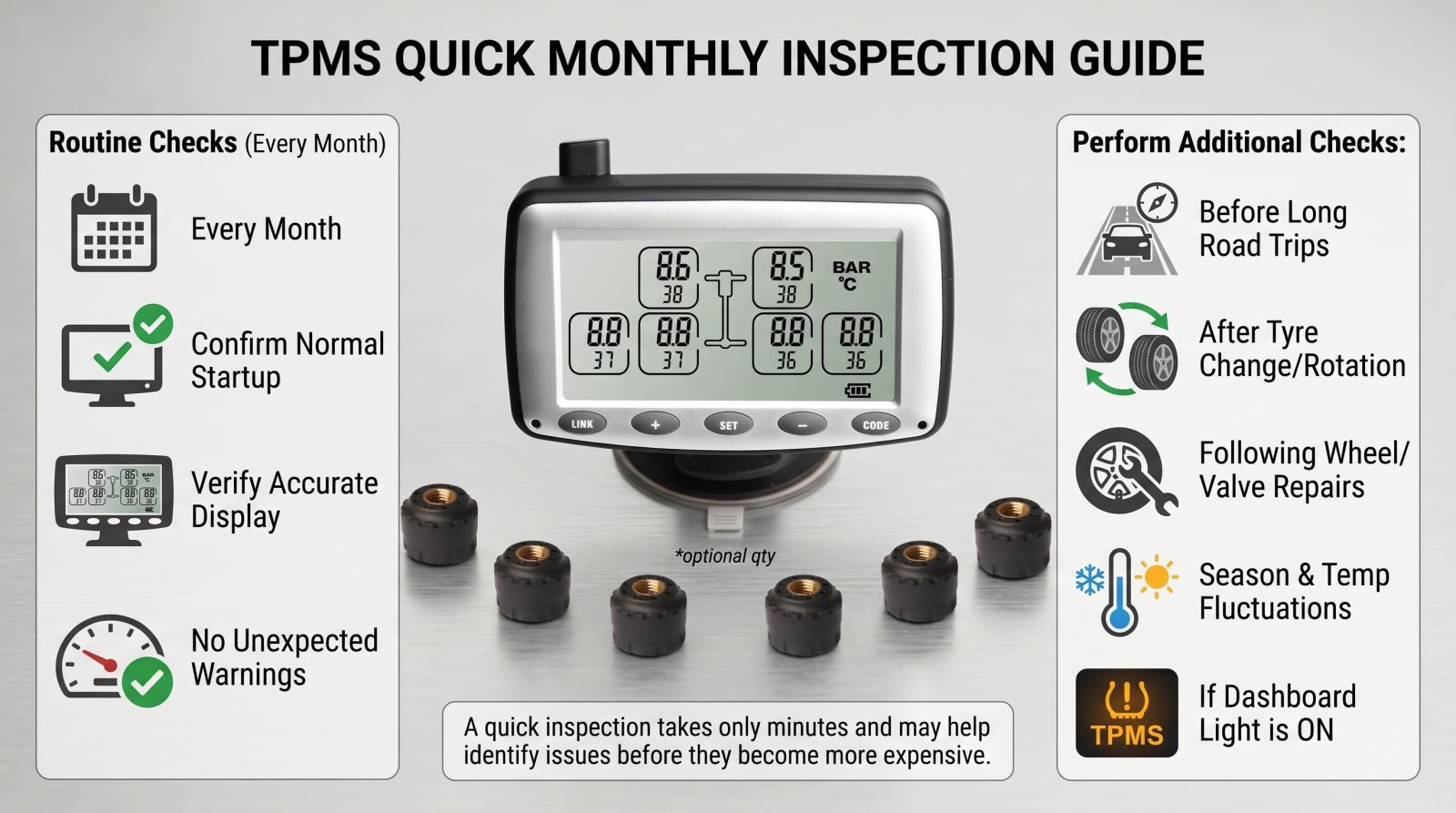
It's also a good idea to perform a check:
- Before long road trips.
- After replacing or rotating tyres.
- Following repairs involving wheels or valves.
- When seasons change and temperatures fluctuate.
- If your dashboard warning light remains illuminated.
Even if your vehicle appears to be driving normally, a quick monthly inspection only takes a few minutes and may help identify issues before they become more expensive.
Signs Your TPMS Sensors Need Inspection or Replacement
Like any electronic component, a TPMS tire pressure sensor is designed to provide reliable performance throughout its expected service life. Batteries eventually wear out, physical damage can occur during tyre servicing, and environmental conditions may affect performance over time.
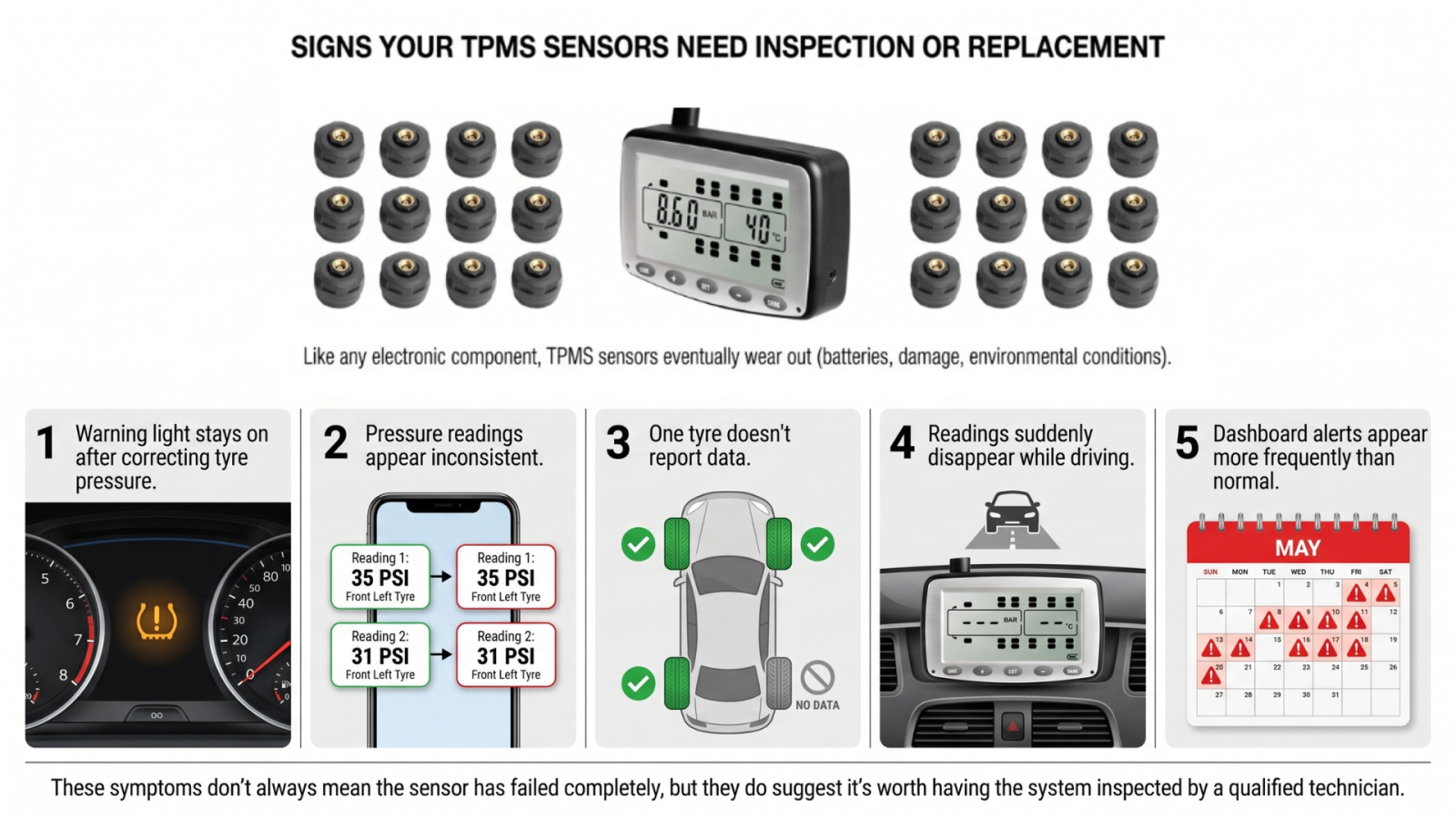
Watch for these common warning signs:
- Warning light stays on after correcting tyre pressure.
- Pressure readings appear inconsistent.
- One tyre doesn't report data.
- Readings suddenly disappear while driving.
- Dashboard alerts appear more frequently than normal.
These symptoms don't always mean the sensor has failed completely, but they do suggest it's worth having the system inspected by a qualified technician.
What Can Cause TPMS Sensors to Stop Working Properly
Several factors can affect how accurately your tyre monitoring system performs over time. Normal battery wear is one of the most common causes, but physical damage during tyre fitting, corrosion around the valve stem, harsh road conditions, and extreme temperature changes can also impact performance.
Drivers who frequently travel on rough roads or regularly change between off-road and highway tyres may want to pay closer attention to the condition of their monitoring equipment. Addressing small issues early can help prevent inaccurate readings and unnecessary warning lights.
Simple Ways to Extend the Life of Your TPMS Sensors
Although sensors require very little maintenance, a few simple habits can help maximise the lifespan of each TPMS sensor.
Always ensure tyre changes and balancing are performed carefully to avoid accidental damage to valve-mounted components. If you're using aftermarket wheels, confirm they remain compatible with your vehicle's monitoring equipment.
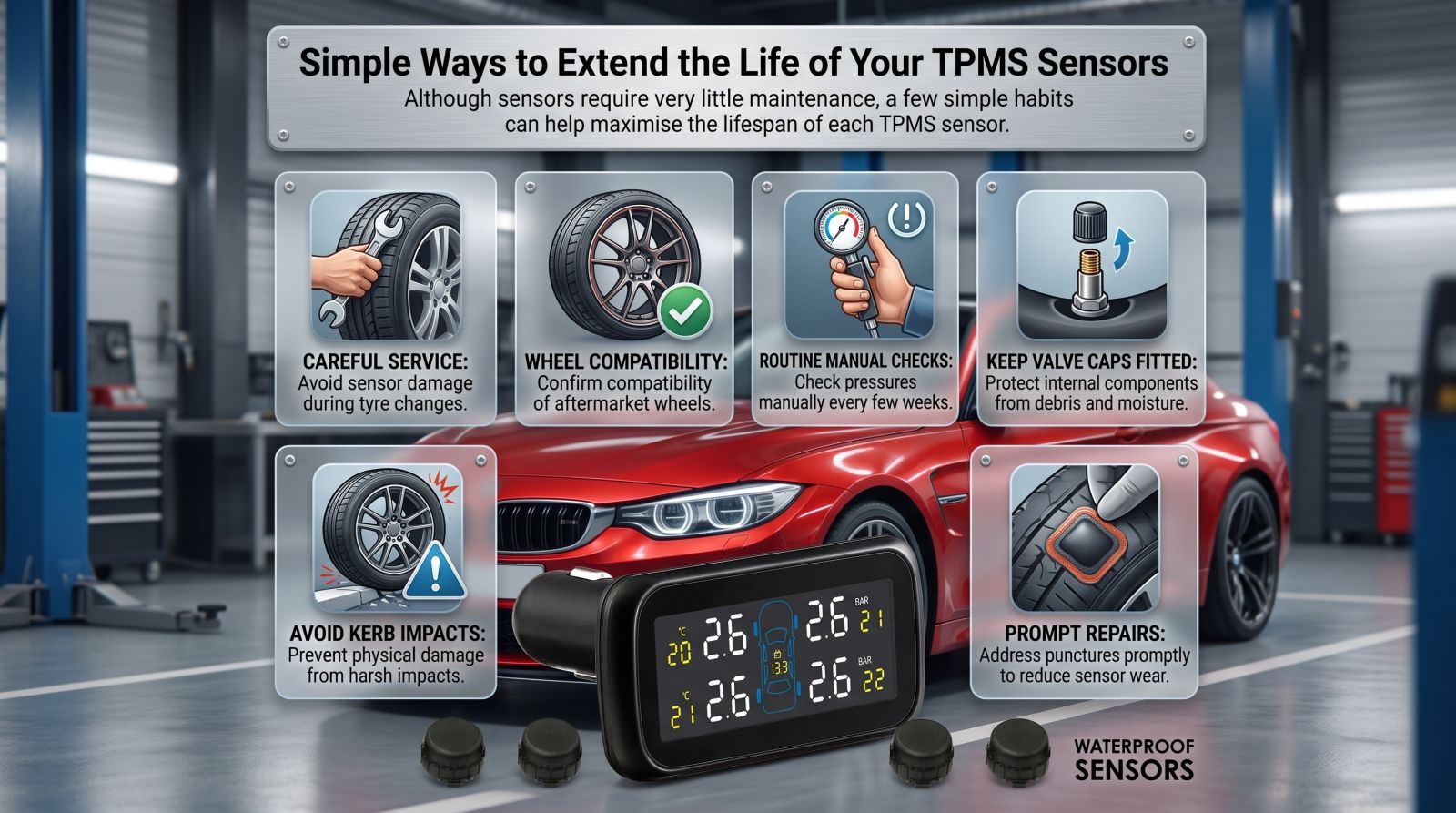
It's also worthwhile checking tyre pressures manually every few weeks, even if the dashboard doesn't display a warning. Electronic systems are designed to assist drivers rather than replace routine maintenance.
Keeping valve caps fitted, avoiding harsh impacts with kerbs, and addressing punctures promptly can also help protect sensor components from unnecessary wear.
When to Replace Your TPMS Sensors
Most sensor batteries are sealed inside the unit, meaning the entire sensor is usually replaced once the battery reaches the end of its service life.
Depending on driving conditions and vehicle usage, many sensors last between five and ten years. However, replacement may be needed sooner if a sensor is physically damaged or exposed to corrosion.
Common reasons for replacement include:
- Battery failure.
- Impact damage.
- Valve corrosion.
- Communication faults.
- Damage during tyre replacement.
Replacing faulty sensors promptly helps ensure your monitoring system continues providing reliable information whenever you drive.
Choosing the Best TPMS in Australia
If you're considering upgrading an older vehicle that doesn't include factory tyre monitoring, aftermarket systems provide a practical option. When comparing available products, look for features that suit your driving habits rather than simply choosing the cheapest model.
Useful features may include:
- Real-time pressure monitoring.
- Temperature monitoring.
- Audible alerts.
- Easy-to-read displays.
- Solar-powered receivers.
- Support for caravans or trailers.
Selecting the right TPMS in Australia depends on whether you drive a passenger car, work vehicle, 4WD, caravan, or tow regularly. Choosing a reliable system that suits your vehicle can make everyday monitoring simpler and more convenient.
Benefits of Using a Modern TPMS Monitoring System
A modern TPMS monitoring system continuously keeps an eye on tyre conditions while you're on the road. Rather than relying solely on visual inspections, drivers receive alerts whenever significant pressure changes occur.
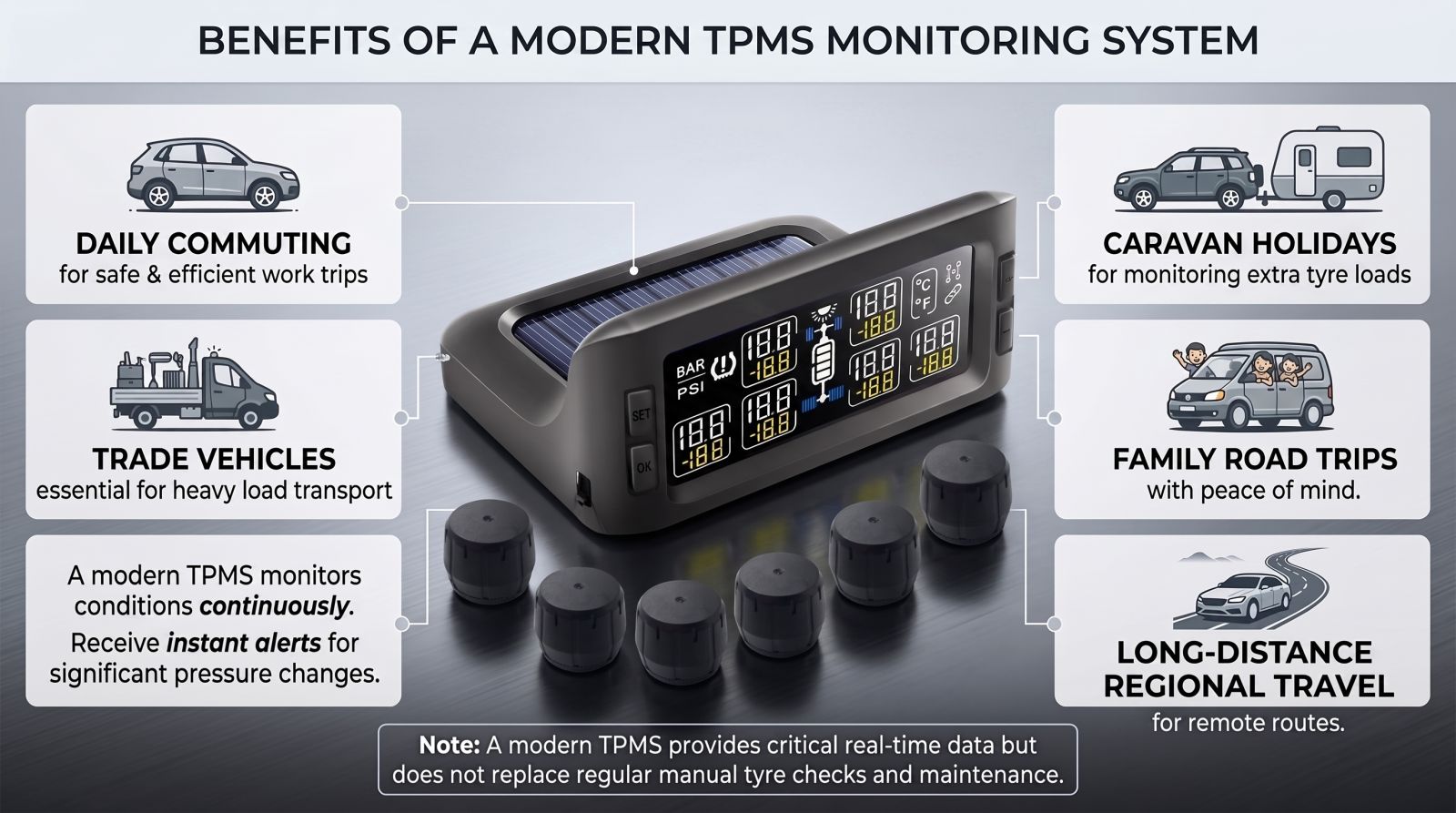
This can be particularly useful for:
- Daily commuting.
- Family road trips.
- Caravan holidays.
- Trade vehicles carrying equipment.
- Long-distance regional travel.
While no electronic system replaces regular maintenance, having real-time information available allows drivers to respond sooner when tyre conditions change unexpectedly.
Frequently Asked Questions About TPMS Sensors
Should I still check tyre pressure manually?
Yes. Manual pressure checks remain an important part of routine vehicle maintenance and help verify that your monitoring system is providing accurate readings.
Can tyre pressure change overnight?
Yes. Cooler temperatures often cause tyre pressure to drop slightly, especially during colder months.
Do sensors need servicing during tyre replacement?
Whenever tyres are replaced or rotated, it's worth asking your tyre technician to inspect the sensors for damage or wear.
Can faulty sensors trigger false warnings?
Yes. Low battery power, communication issues, or damaged components may occasionally produce incorrect alerts.
Are aftermarket systems suitable for older vehicles?
Many aftermarket monitoring systems are designed specifically for vehicles that weren't originally equipped with tyre monitoring technology.
Keep Your TPMS Sensors Performing at Their Best
Checking your monitoring system doesn't require complicated maintenance, but a little attention goes a long way. A quick monthly inspection, combined with routine tyre pressure checks and professional servicing when needed, can help keep your vehicle performing as expected.
Whether you commute daily, head off on weekend adventures, or tow a caravan across Australia, looking after your TPMS tyre pressure monitoring system is a practical step towards better tyre care and greater confidence on the road.
If you're considering upgrading your vehicle with an aftermarket tyre monitoring solution, explore Elinz's range of tyre pressure monitoring products designed to provide practical, reliable performance for everyday Australian driving.
Did you enjoy reading this article?
Stay updated on our latest deals and promos by following our social media accounts.
Find this article helpful? Don't forget to click on the share buttons below.