Plugging in your car battery charger should be a straightforward way to restore your vehicle's battery power. However, what happens when the battery refuses to charge, even after being connected for hours? This can be frustrating, especially when you need your car ready for your daily commute or an upcoming road trip.
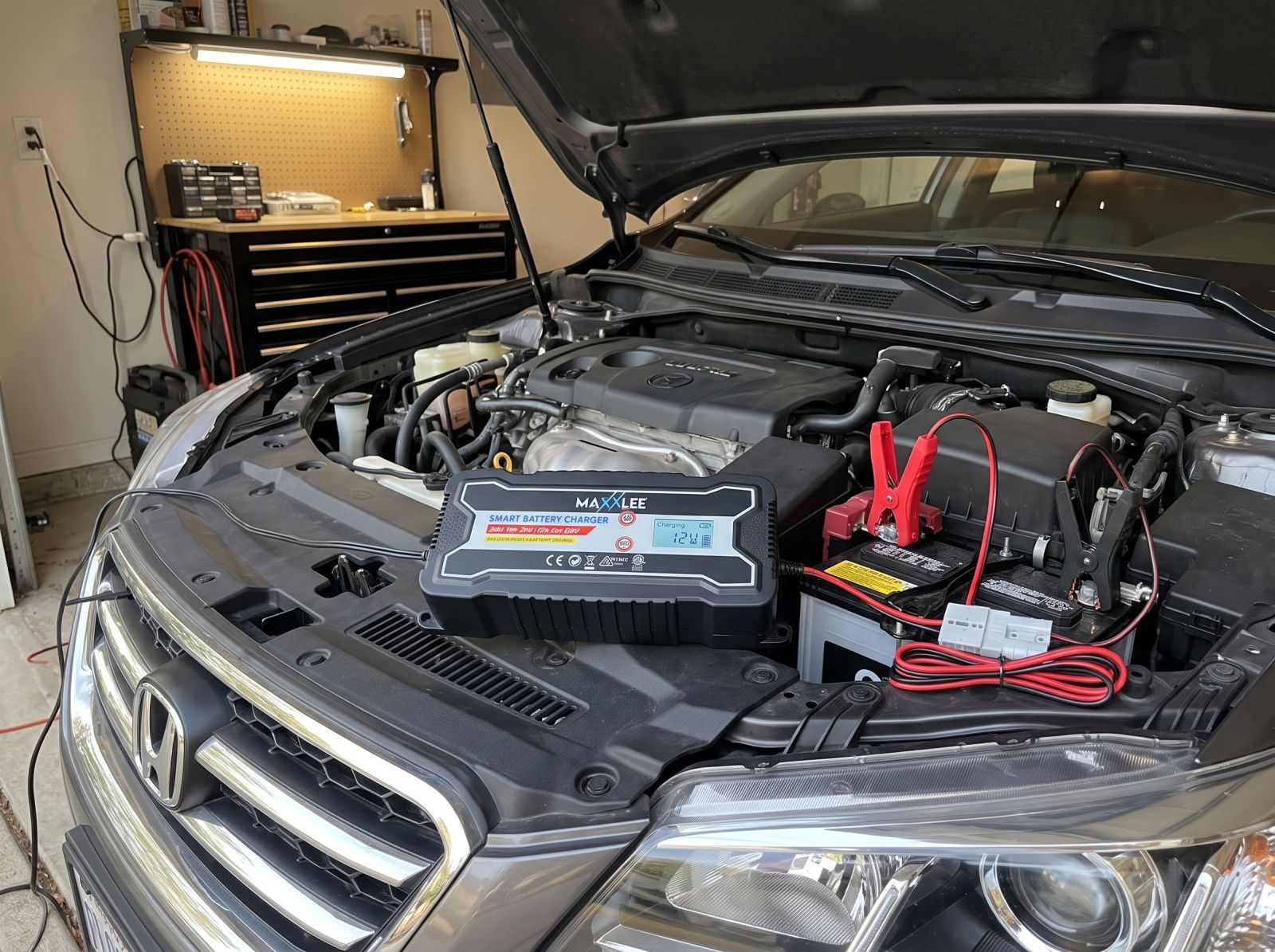
Several issues can prevent a battery from accepting or holding a charge. Understanding these problems can help you identify the cause, avoid unnecessary replacements and determine when professional assistance is needed.
Common Reasons Your Car Battery Is Not Charging
A battery that does not respond to charging may have an underlying electrical or mechanical problem. Here are some common reasons to investigate.
1. The Battery Is Too Old or Damaged
Car batteries naturally lose their ability to hold a charge over time. Age, repeated deep discharges and exposure to extreme temperatures can gradually affect their performance.
If your battery is several years old, it may have deteriorated internally. Even when connected to a portable car battery charger, a damaged battery might struggle to accept or retain enough power to start your vehicle.
2. Battery Terminals Are Dirty or Corroded
Corrosion can build up around battery terminals, creating a poor electrical connection. This may prevent charging current from flowing properly between the charger and battery.
Look for white, blue or greenish deposits around the terminals. If corrosion is present, have the connections cleaned safely before attempting to charge again. Always follow the battery and charger manufacturer's safety instructions.
3. The Charger Is Not Suitable for Your Battery
Not all chargers work with every battery type. Using an incompatible charger or incorrect voltage setting can prevent proper charging.
For example, a 12v battery charger is designed for 12-volt batteries, but you should still check whether it supports your battery's chemistry, such as lead-acid, AGM or lithium.
Always check the manufacturer's recommendations before connecting a charger.
4. The Battery Has Entered a Deeply Discharged State
A severely discharged battery may have a voltage level too low for some chargers to recognise. As a result, the charger might not begin its charging cycle even when properly connected.
Some chargers include recovery or low-voltage detection features, but not every model supports deeply discharged batteries. Check the manufacturer's instructions rather than repeatedly attempting to charge it.
How to Troubleshoot a Car Battery That Will Not Charge
Before replacing your battery, consider these practical troubleshooting steps.
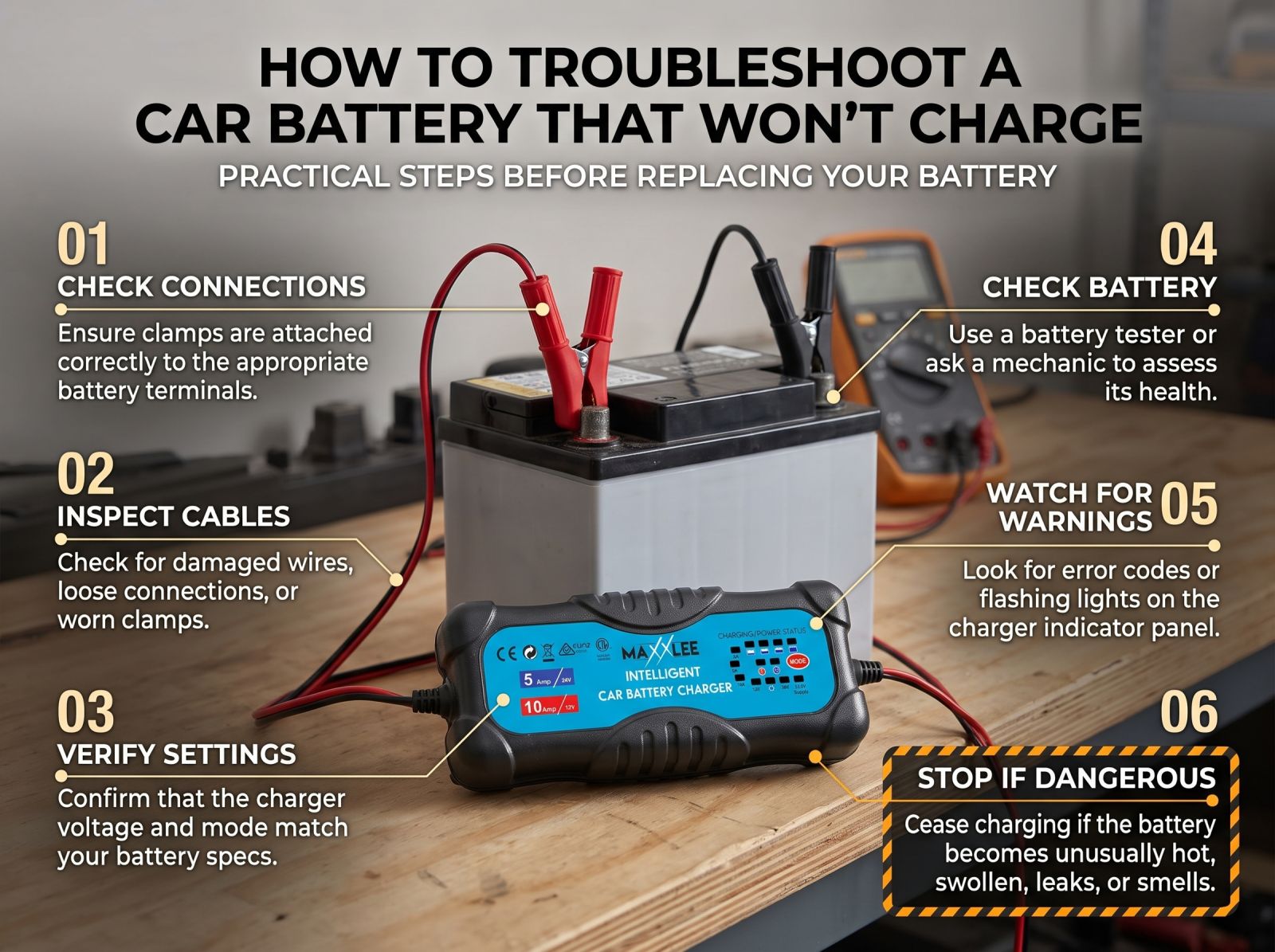
- Check the connections: Make sure the charger clamps are attached correctly to the appropriate battery terminals.
- Inspect the cables: Look for damaged wires, loose connections or worn charging clamps.
- Verify the settings: Confirm that the charger voltage and battery mode match your battery specifications.
- Check the battery condition: Use a suitable battery tester or ask a mechanic to assess its health.
- Look for warning indicators: Some chargers display error codes or flashing lights when they detect connection or battery problems.
If the battery becomes unusually hot, swollen, leaks or produces an unusual smell, stop charging and seek professional assistance.
Can the Right Battery Charger Make a Difference?
Choosing a suitable charger can make battery maintenance easier, particularly if your vehicle is not driven regularly.
An automatic trickle battery charger can be useful for maintaining a battery over extended periods, as compatible models automatically regulate charging to help prevent overcharging.
For drivers who travel frequently, a portable charger offers a convenient option for charging needs at home, in the garage or while preparing for longer trips.
A handheld car battery charger can also be practical for drivers who prefer a compact charging option that is easier to store in their vehicle or garage.
However, remember that even the right charger cannot restore a severely damaged battery. Identifying the underlying problem remains important.
Frequently Asked Questions About Car Battery Charging
Why does my battery charger say fully charged but my car will not start?
Your battery may have lost its ability to deliver sufficient starting power. Other possibilities include a faulty starter motor or an electrical problem.
How long should a car battery take to charge?
Charging time depends on battery capacity, its current charge level and the charger's output. A deeply discharged battery generally takes longer to recharge.
Can a completely dead car battery be recharged?
Some deeply discharged batteries can be recovered using compatible chargers. However, a battery with internal damage may need replacement.
Should I leave my car battery connected to a charger overnight?
Only if the charger is designed for extended or unattended charging and the manufacturer permits it. Always follow the recommended charging procedure.
Keep Your Car Battery Ready for Everyday Driving
A car battery that refuses to charge may indicate anything from dirty terminals and incompatible charger settings to serious internal battery damage. Checking the connections, verifying compatibility and testing battery condition can help you find the cause before spending money on a replacement.
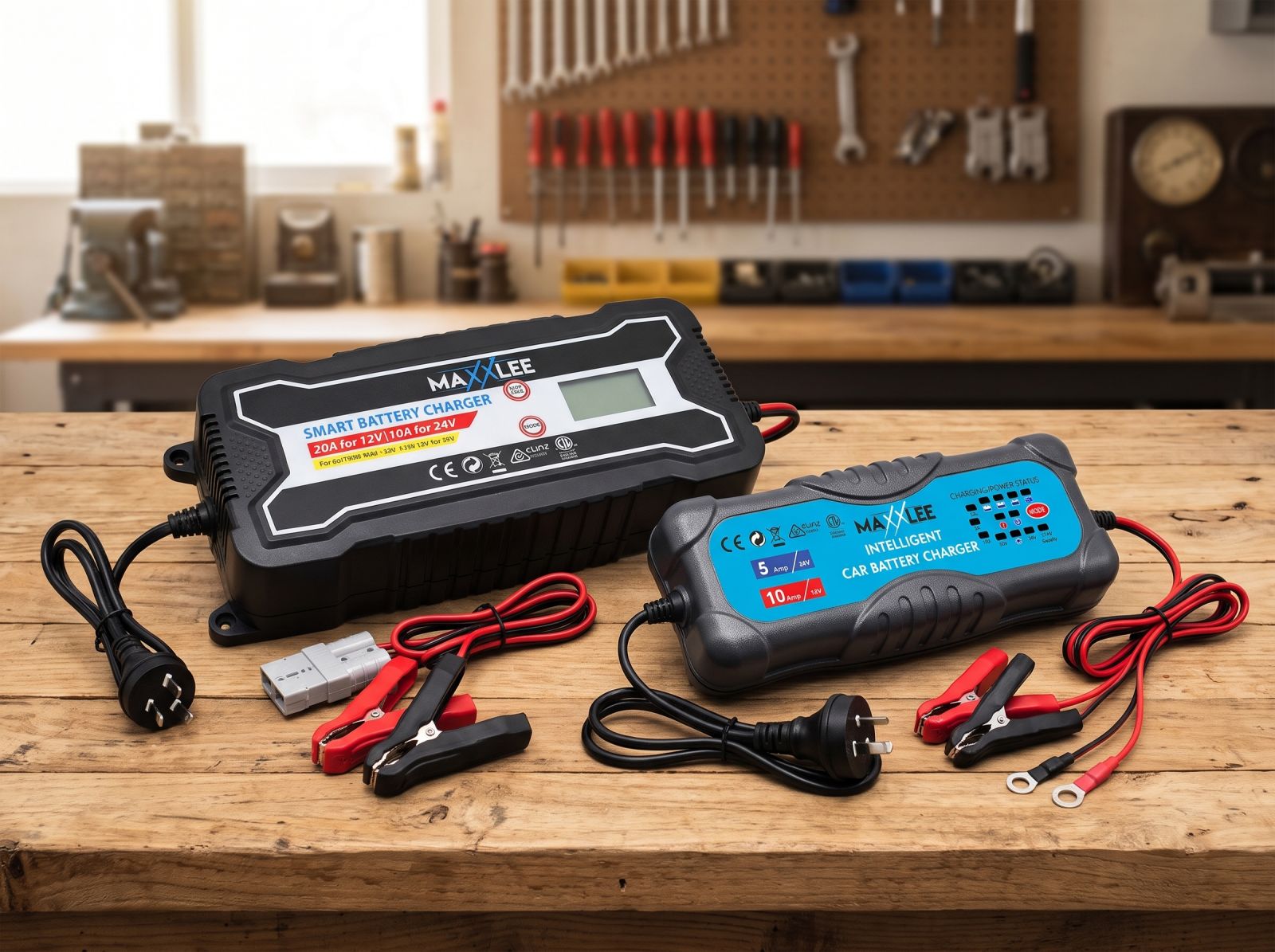
Using a suitable automotive battery charger can also make routine battery maintenance more convenient. Explore Elinz battery chargers to find practical charging options for your vehicle and everyday driving needs.
Did you enjoy reading this article?
Stay updated on our latest deals and promos by following our social media accounts.
Find this article helpful? Don't forget to click on the share buttons below.