Keeping the right tyre pressure is one of the easiest ways to make driving safer, smoother, and more fuel-efficient. However, many drivers only think about their tyres when something is obviously wrong. The issue is that tyre pressure can drop slowly without any visible signs. This is where TPMS comes in handy. It helps drivers spot pressure problems before they become dangerous.
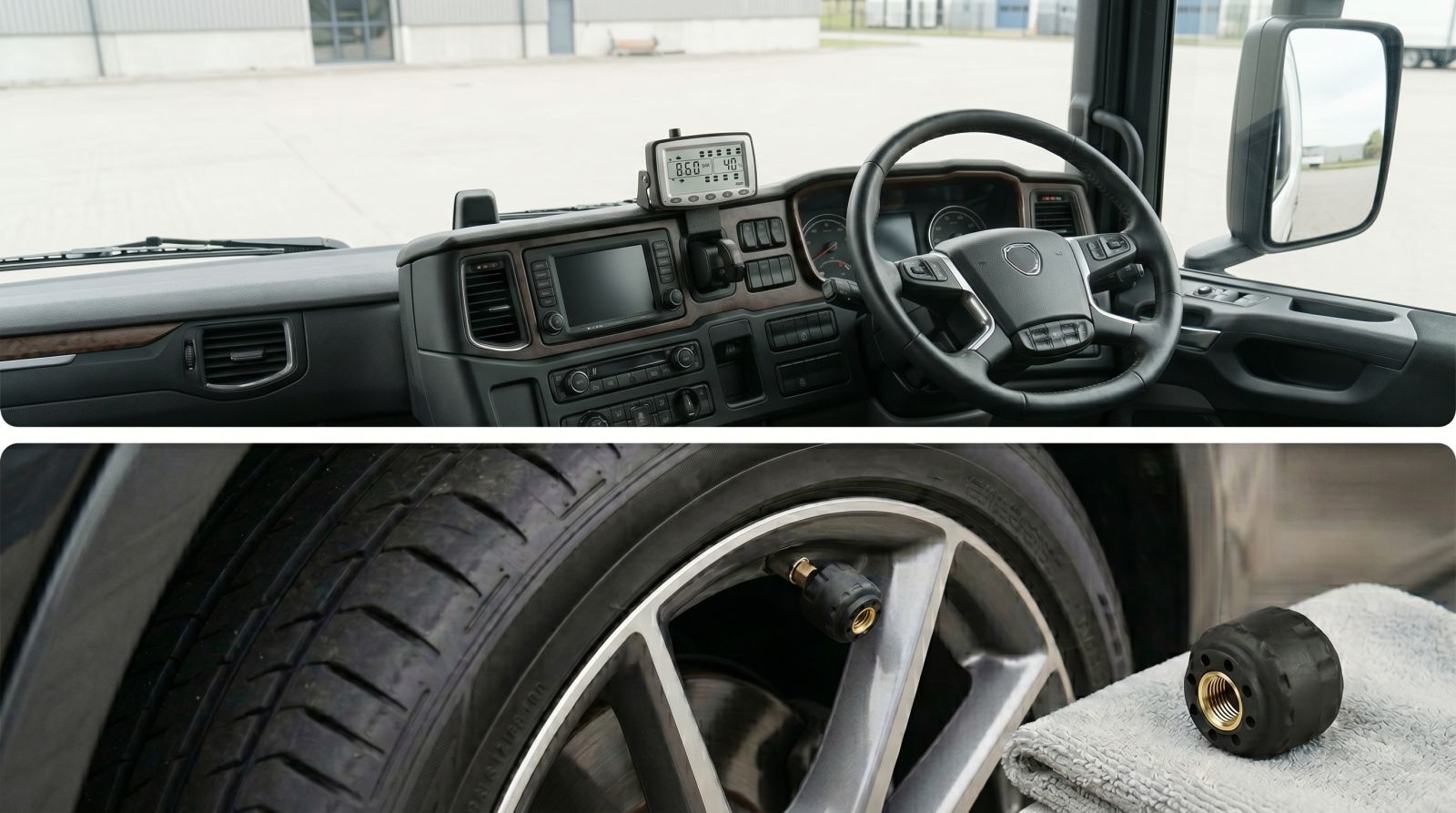
Manual tyre pressure checks are still helpful but rely heavily on regularity and the driver remembering to check. A monitoring system provides more frequent feedback while the vehicle is in use. So which option is safer for everyday drivers? The best answer depends on each method's functionality, what it can detect, and how consistently it is used.
What is TPMS?
A TPMS tire pressure monitoring system is a vehicle safety feature that alerts drivers when tyre pressure drops below a safe level. Instead of waiting for the driver to manually inspect each tyre, the system monitors pressure and warns when attention is needed.
This can be particularly helpful for everyday drivers because some tyre issues are not easy to notice. A tyre can look normal while being underinflated. Driving on underinflated tyres can increase braking distance, reduce handling, cause uneven wear, and raise the risk of overheating.
In simple terms, the system acts like an extra set of eyes on your tyres. It does not replace good maintenance, but it can make tyre care more consistent and less reliant on guesswork.
How does TPMS work?
There are two common ways these systems monitor tyre condition. Some vehicles use direct pressure monitoring, where small devices inside the wheels measure air pressure and send readings to the vehicle’s system. Others use indirect monitoring, which estimates pressure changes by comparing wheel rotation using existing vehicle sensors.
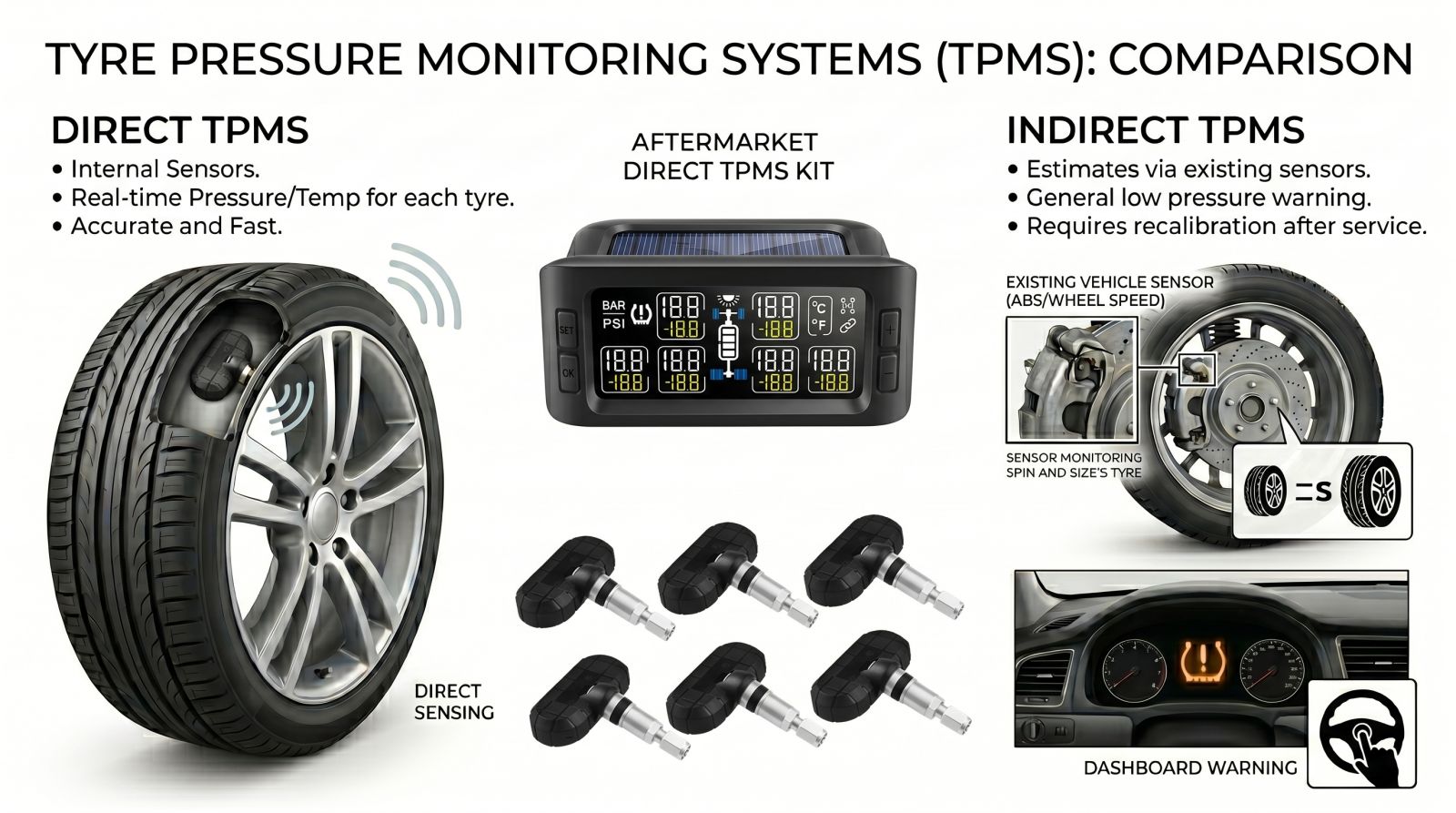
Direct systems are usually more accurate because they measure pressure inside each tyre. Indirect systems can still be useful, but they may need recalibration after you inflate, rotate, or replace tyres.
Many modern vehicles show warnings on the dashboard when pressure gets too low. Some advanced systems display pressure readings for each tyre, making it easier to identify which one needs attention. In aftermarket setups, information may appear through a separate display or app, depending on the product.
Why tyre pressure matters for everyday safety
Tyre pressure affects more than comfort. It is crucial for how a vehicle brakes, corners, and responds during sudden movements. When a tyre is underinflated, more of its surface contacts the road. This can lead to extra heat and wear, especially during long drives, in hot weather, or with heavy loads.
Overinflation can cause problems, too. It may reduce traction, make the ride rougher, and lead to faster wear in the centre of the tyre tread. Both low and high pressure can shorten tyre life and decrease overall vehicle control.
For daily drivers, the danger often comes from routine neglect. School runs, commutes, shopping trips, and weekend drives can easily make tyre checks forgettable. A slow leak may go unnoticed for weeks until the vehicle starts pulling to one side or the tyre becomes visibly flat.
Manual tyre pressure checks
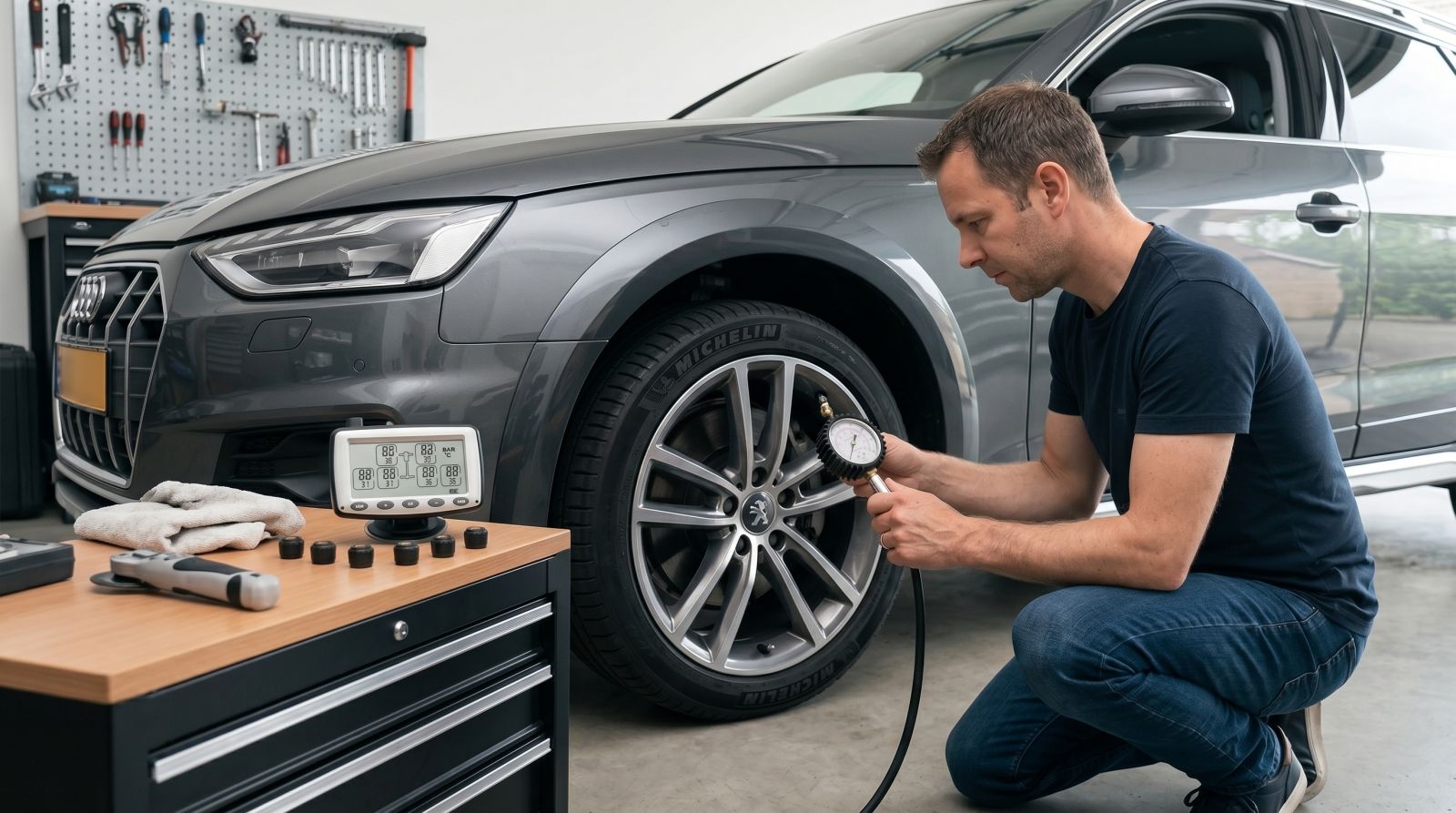
Manual checks involve using a tyre pressure gauge at home, at a service station, or during regular vehicle maintenance. The driver checks each tyre individually and compares the reading with the recommended pressure in the owner’s manual or on the vehicle placard.
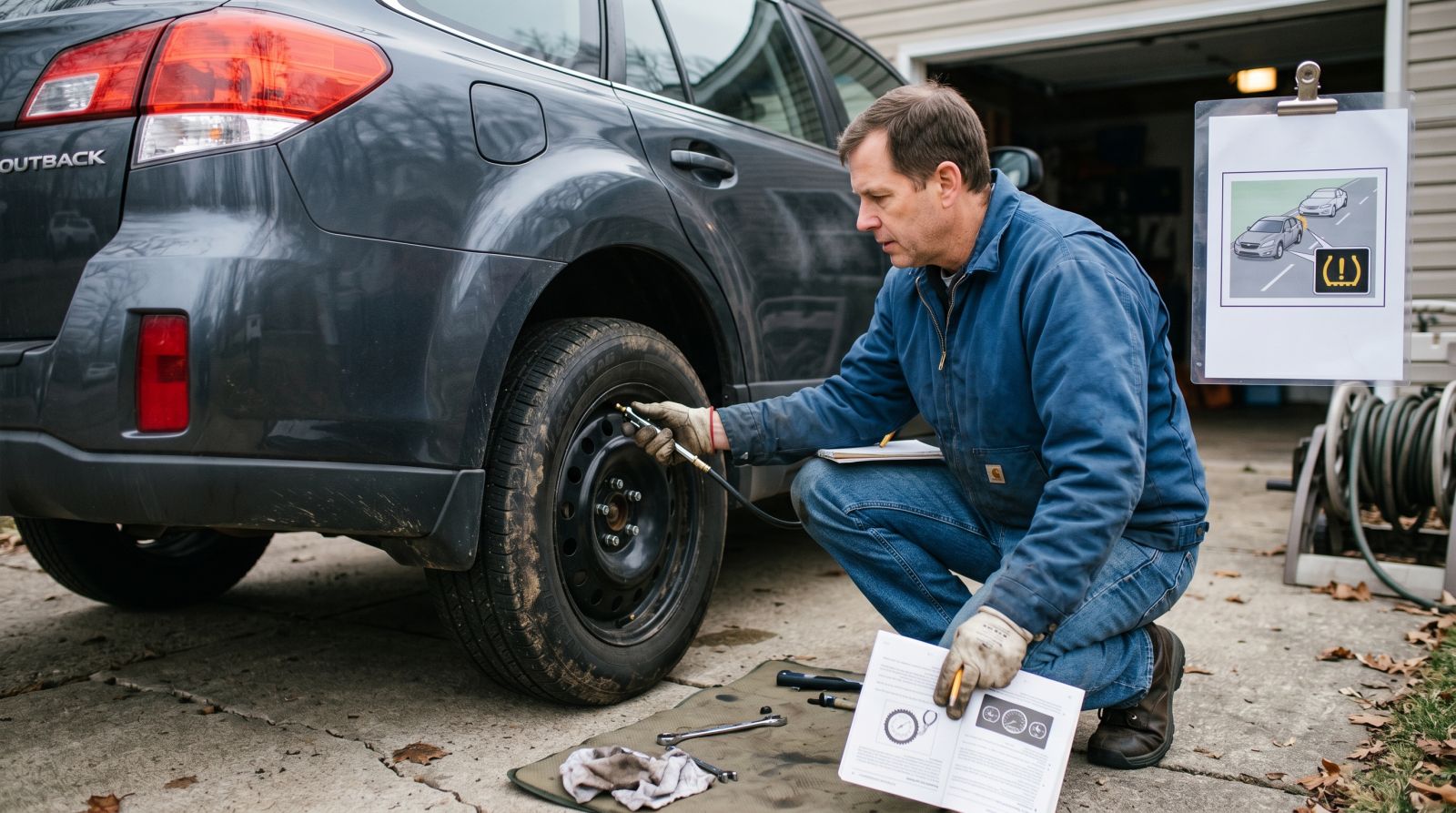
This method is straightforward and inexpensive. A quality gauge can provide accurate readings, and manual checks give drivers control over maintenance. They also encourage people to inspect tyre condition, tread depth, valve caps, and visible damage simultaneously.
However, manual checks are only helpful if done regularly. Many drivers check tyre pressure too infrequently or only before long trips. Readings can also be affected if tyres are hot from recent driving. For best accuracy, tyres should usually be checked when cold.
Strengths of manual checks
Manual checks are reliable when done correctly. They do not depend on electronics, batteries, dashboard alerts, or sensors. They also allow drivers to check the spare tyre, which monitoring systems may not cover.
Another advantage is cost. Manual gauges are affordable, and checking pressure is typically free or low-cost. For drivers who follow a consistent maintenance schedule, manual checks can work very well.
Manual checking also builds awareness. When you physically inspect the tyres, you may notice cracks, nails, uneven wear, bulges, or sidewall damage. A digital warning may alert you to pressure loss, but it will not necessarily explain why the issue is happening.
Limits of manual checks
The biggest weakness of manual checking is human habit. Many people plan to check their tyre pressure but forget. Others may not know the correct pressure or may rely solely on visual inspections.
Manual checks also provide only a snapshot in time. Your tyres may be fine in the morning but lose pressure later due to a puncture or valve issue. Unless you check again, you may not know there is a problem until handling changes or the tyre becomes visibly low.
This is where TPMS offers an advantage. It can warn drivers during regular use, helping them respond sooner when pressure drops unexpectedly.
The role of sensors in modern monitoring
In direct systems, TPMS sensors are typically mounted to the wheel rim inside the tyre (internal sensors), or in the existing tire valve stems (external sensors). They measure pressure and sometimes temperature, then send information to the vehicle. These small components help provide real-time or near-real-time alerts when tyre pressure becomes unsafe.
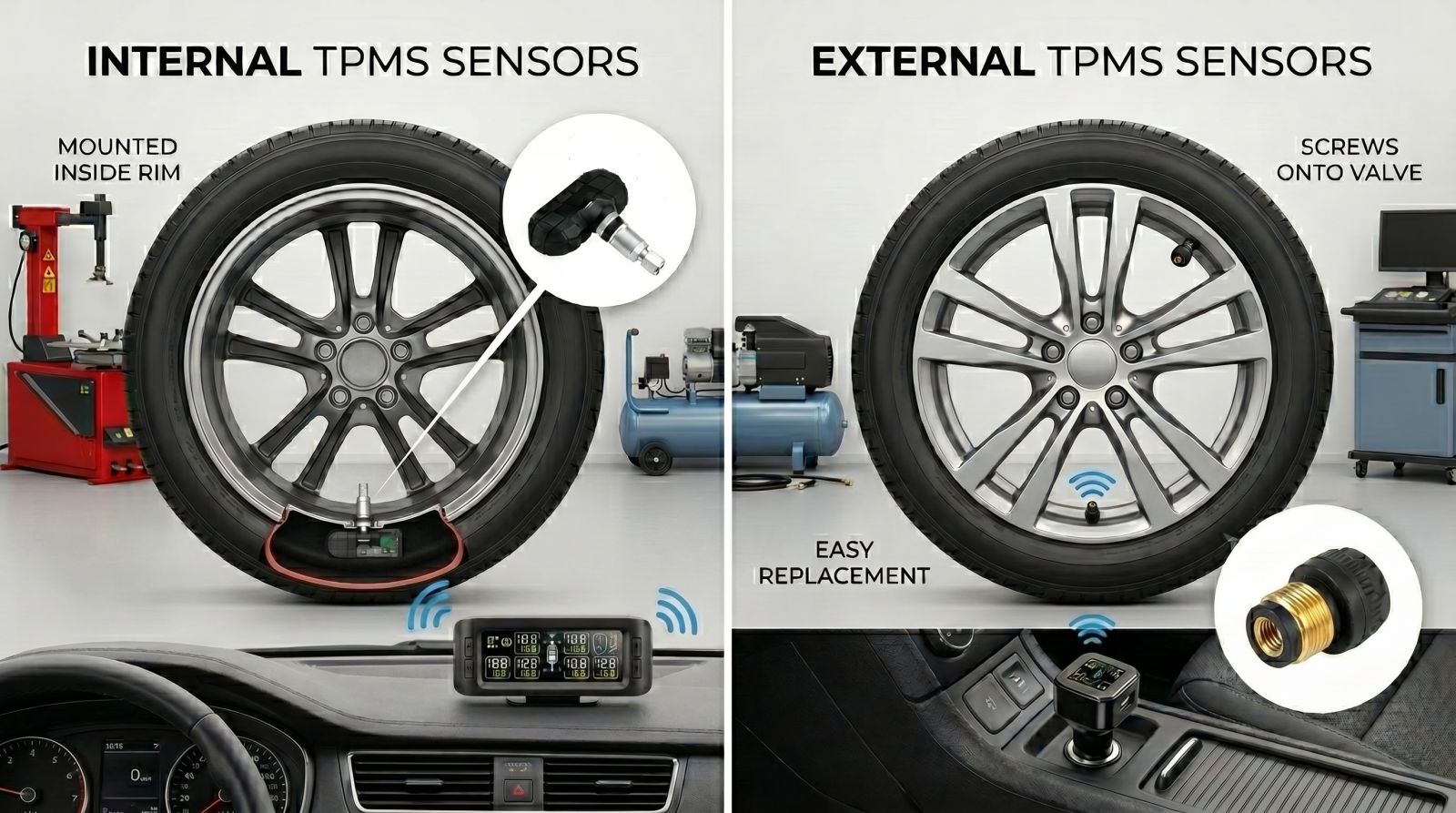
Like any electronic component, they require proper care. A TPMS sensor may eventually need replacement if its battery runs out or it gets damaged during tyre servicing. This highlights the importance of professional installation and tyre shop experience.
Comparing safety on daily roads
For everyday driving, a monitoring system is generally safer for quickly detecting unexpected pressure loss. If a tyre starts leaking during a commute, the driver may receive an alert before the tyre becomes dangerously low. That early warning can help prevent further damage and reduce the chance of a roadside emergency.
Manual checks are still important but are less responsive. They work best as scheduled maintenance rather than as active alerts. A driver who checks pressure once a month may still miss a sudden puncture the day after checking.
The safest approach is not necessarily choosing one over the other. It is about using both wisely. A monitoring system provides alerts between inspections, while manual checks can confirm accuracy and reveal visible tyre problems.
Comfort fuel efficiency and tyre life
Correct pressure improves more than safety; it also helps your vehicle use fuel more efficiently. Underinflated tyres create extra rolling resistance, requiring the engine to work harder. Over time, this can increase fuel costs.
Proper pressure also supports even tyre wear. When pressure is too low or too high, the tread may wear unevenly, reducing tyre life and increasing replacement costs. Regular monitoring helps drivers catch pressure changes before they become expensive issues.
For long-distance drivers, caravan owners, tradespeople, and families carrying heavy loads, TPMS tyre pressure information can be especially valuable because added weight can make tyre condition even more crucial.
When manual checks are still essential
Even with a monitoring system, manual inspection should not be overlooked. Drivers should check tyre pressure before long trips, after tyre servicing, when carrying heavy loads, and when towing. Regularly inspecting tyre tread, sidewalls, and valve caps is also wise.
Manual checks are useful for confirming that the displayed readings make sense. If a warning appears, a physical gauge can help verify the issue before reinflating or repairing the tyre.
A complete tyre care routine includes both technology and hands-on inspection. The monitoring system adds convenience and early alerts, while manual checks provide confirmation and a visual assessment.
Choosing the right tyre pressure safety option
If your vehicle has a built-in system, find out how it works and what the warning lights indicate. Some drivers ignore dashboard alerts, thinking they are not important. Tyre warnings are serious, especially before highway driving or long trips.
If your vehicle lacks a built-in system, consider an aftermarket TPMS tyre pressure monitoring system. Look for clear readings, reliable alerts, quality parts, and compatibility with your vehicle type. Drivers who tow caravans or trailers might need a setup that accommodates extra wheels and longer distances.
Which option is safer for everyday drivers?
For safety, the best choice is to use both. A monitoring system provides early warnings while driving, especially for unexpected drops in pressure. Manual checks are helpful for routine maintenance, confirming accuracy, and spotting physical tyre damage.
Relying only on manual checks can create gaps between inspections. Relying solely on electronic alerts can lead drivers to miss visible tyre wear or damage. Together, they form a more complete safety routine.
Everyday drivers don’t need to be tyre experts, but they should stay aware. Tyres are the only part of the vehicle that touches the road, so even small pressure issues can affect control, braking, comfort, and costs.
Safer driving starts with better tyre awareness
Tyre pressure may not be the most exciting aspect of owning a vehicle, but it is very important. Manual checks are still a reliable habit, while modern monitoring provides faster alerts and greater peace of mind.
For most people, the safest approach is straightforward. Use technology to stay informed, but continue checking your tyres regularly. Whether you drive daily in the city, take weekend road trips, tow a caravan, or manage a work vehicle, being aware of tyre conditions can help prevent avoidable issues. As more drivers learn about TPMS in Australia, tyre pressure safety is becoming easier, smarter, and more practical for everyday roads.
Did you enjoy reading this article?
Stay updated on our latest deals and promos by following our social media accounts.
Find this article helpful? Don't forget to click on the share buttons below.