With a wide range of choices of Security Camera Systems available in the market, you would wonder what is the best setup to get for your home or your business. If you are looking for a security system that runs around-the-clock and is scalable and flexible, the NVR security camera system would be perfect for you.
In this article, you will learn about the NVR Camera System - how it works, what makes it stand out and when to consider replacing it.

What is an NVR camera system?
A network video recorder (NVR) is a specialised computer system that records video footage in digital format and stores it to a hard drive. They are generally paired with internet protocol (IP) cameras that capture, encode and process video data directly from the camera itself and then send it to the recorder via wired or wireless connections. Typically, if it's a wired connection, a camera connects to the NVR via wired or wireless connections. Typically, if it's a wired connection, a camera connects to the NVR via an ethernet cable.
How do NVR camera systems work?
Cameras: There are two types of cameras used together with NVR. Power over Ethernet (PoE) cameras are IP wired cameras that are powered by an Ethernet connection. These cctv camera systems offer convenience by eliminating the need for an external power source while also transferring data to the NVR using only a single cable. This eliminates the use of countless cables which makes installation easier.
On the other hand, wireless IP cameras are more flexible as you just need to plug it into an electric outlet. These cameras are much easier and faster to set up than wired cameras. Providing you an increased flexibility since you can easily move them around to get the best coverage possible without running cables through your home or business.
NVRs: The Network Video Recorder only serves the purpose of receiving, storing and viewing footage which is a key part of an NVR camera system. Once the data from IP cameras reaches the NVR, the footage can be viewed remotely, online or offline.
Network connection: IP security cameras connect to the NVR using Ethernet or wireless connections. CAT5e or CAT6 are the recommended Ethernet cable standards.
Advantages of NVR System
- IP cameras offer higher-quality video resolution, from 2MP (1080p) to 12MP (4K) with a frame rate of 30 fps (real-time video).
- Easier installation as a single ethernet cable per camera is only used for wired and power adapter for wireless.
- Wireless CCTV NVR systems can be easily expanded by adding additional cameras.
- More flexibility in terms of mounting locations or camera placement.
- Advanced features such as facial recognition, motion detection and night vision capabilities.
- Some IP cameras can record video with audio natively.
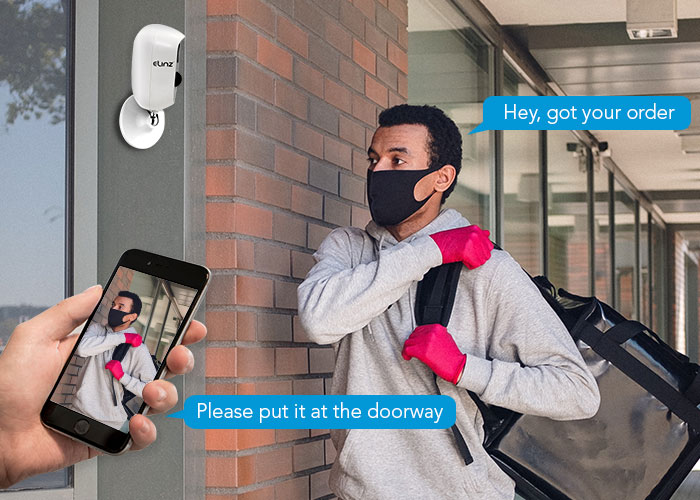
- Remote access of security footage via mobile device or PC when connected to a network.
- NVRs allow remote access to a live video stream from the IP camera while simultaneously recording.
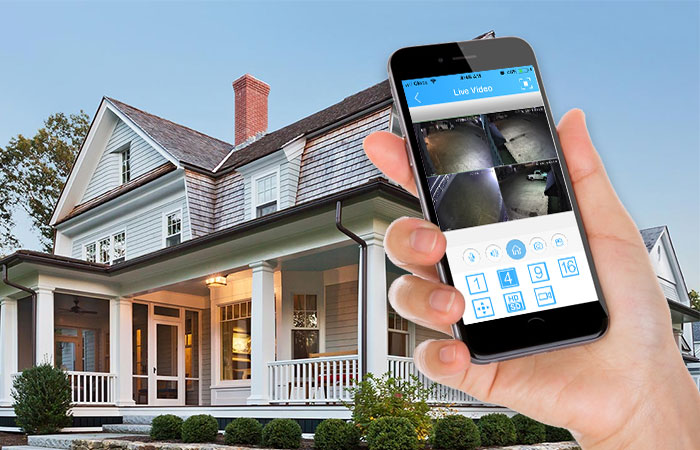
- User friendly graphical user interface, flexible recording, playback capability, motion detection and wide angle view.
- Plug and play compatibility makes it the easiest wireless security camera system to set up. The IP cameras will be automatically configured to connect and record to an NVR system.
- Some IP cameras can also be used as standalone cameras, some support internal microSD cards for local recording.
How many cameras can connect to an NVR System?
You can connect 4, 8, 16, 32, 64, 128, 256 cameras based on the NVR you purchased. NVR are available in 4, 8, 16, 32, 64, 126, 256 channels depending on brand and model. However, the maximum number of cameras they can record at any one time can vary significantly depending on the bandwidth.
IP cameras have very demanding bandwidth requirements because of the high resolution video that they stream. This demands using a dedicated network when you opt to set up multi camera and multi megapixel systems.
Can DVR or NVR work without internet connection?
Internet connection is only required when you want live footage of an NVR camera and receive push alerts. However, If you want to record videos to a hard drive and view them when needed, the NVR CCTV system doesn't need to connect to the Internet.
When to change your CCTV System?
The reliability of the cables of security cameras might be jeopardised with age. Wires can give out, crook, or break off over time, which will have an impact on the overall performance of your system.
Here are some common signs that it is time to let go of your old system:
- Exhibits grainy and pixelated footage
- Records incomplete footage
- Current system lacks advanced features
- Lacks an infrared cut filter which reflects or blocks near-infrared light while allowing visible light to flow through
- Current system is not equipped for severe weather
- Faulty power supply which brings safety hazards
What to look for in an NVR Camera System?
1. High resolution and wide viewing angle
High-resolution cameras are highly recommended when covering larger areas with great levels of detail. Elinz NVR Systems record in HD 1080P to capture clearer and crisp images, provide HD live video, ensuring picture quality with 2.0 Megapixel CMOS Sensor. They also feature a 105° diagonal field of view that allows you to see exactly what is happening in and around your home.
2. Motion detection with real-time alerts
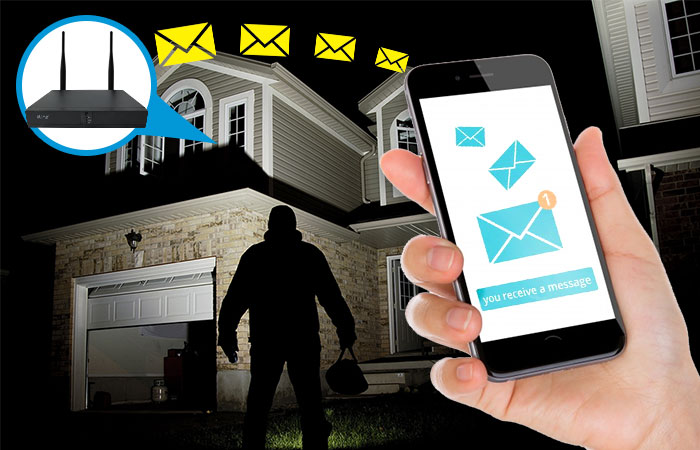
Security cameras systems with motion detection will automatically start recording everytime it detects motion. This lessens the amount of wasted footage to only record and store relevant contents. Push notifications will be sent to your smartphone via a designated App.
3. Night vision
Elinz cameras are equipped with HD quality CMOS sensors that offer clearer night vision up to 10m. While others have 36 IR LED Wireless Camera providing clear night vision with uniform luminance up to 25m. The camera's night vision mode will automatically activate in low lighting conditions.
4. Remote monitoring
This allows you to remotely view live video footage simultaneously anytime and anywhere on your mobile devices or PC.
5. Weatherproof
The IP cameras should be rated waterproof and dustproof which will be a perfect choice for outdoor or indoor home security. The camera should be able to withstand severe weather conditions and temperature change (-35°C to 55°C).
6. Two-way audio
Each camera should have a built-in speaker and microphone so you can communicate with people being monitored anywhere straight from your smartphone. However, it is important to remember that audio recording of private conversations must be a two and all-party consent.
7. Durable and Sturdy
Elinz cameras come with metal casing, unlike other sellers with plastic casing.
Looking for the best deals for a reliable and the best security cameras? Discover Elinz's selction of NVR Wireless Security Cameras now.
We offer a wide range of NVR Systems that have advanced features such as Real Plug and Play, Rechargeable Battery Operated and IP65 Weatherproof Cameras, Mobile Remote Viewing, Smart Motion Detection Recording and Alerts, Clearer Night Vision, 2-way Audio, Wide Viewing Angle, Intelligent Timetable Playback and many more.
Frequently Asked Questions:
1. Can I use any NVR with my cameras?
Not always. NVRs and cameras must be compatible in terms of protocol, resolution, and encoding. Most IP cameras work best with NVRs from the same brand or those that support the ONVIF standard. Even with ONVIF, some advanced features (like motion detection or audio) may be limited when mixing brands.
2. Are NVR cameras interchangeable?
NVR cameras can be interchangeable if they use the same technology (IP cameras) and are compatible with the NVR’s supported standards. However, plug-and-play functionality and full feature support are usually guaranteed only when using cameras designed for that specific NVR system.
3. Can you add more cameras to a 4-channel NVR?
A 4-channel NVR can only record up to four cameras at the same time. You cannot exceed this limit unless you upgrade to a higher-channel NVR, such as an 8- or 16-channel model.
4. Can you connect a WiFi camera to an NVR?
Yes, but only if the WiFi camera is designed to work with an NVR and supports the required protocol. Standalone consumer WiFi cameras typically cannot connect to an NVR unless specifically stated by the manufacturer.
Did you enjoy reading this article?
Stay updated on our latest deals and promos by following our social media accounts.
Find this article helpful? Don't forget to click on the share buttons below.