Not all power banks are created equal—and the first number you’ll notice is mAh. But what does it really mean, and how much do you actually need?
Whether you’re powering up a smartphone, tablet, or even a laptop, understanding the right capacity saves you money, weight, and charging time. Here’s how to break it down.
.jpg)
What Does mAh Mean?
mAh stands for milliampere-hour, a unit that measures electric power over time. In simple terms, it tells you how much charge a power bank can hold. The higher the mAh, the more times it can charge your devices.
But here’s the catch: not all of that stored energy goes directly to your device. Power loss from voltage conversion, heat, and cable quality typically reduces real output by around 30%.
Power Bank Capacity vs Device Needs
Let’s match common devices with power bank capacities based on real-world use:
| Device |
Average Battery Size |
Recommended Power Bank |
| |
|
|
| iPhone 15 |
~3,350mAh |
5,000–10,000mAh |
| Samsung Galaxy S24 |
4,000mAh |
10,000mAh |
| iPad (10th Gen) |
7,606mAh |
15,000–20,000mAh |
| Nintendo Switch |
4,310mAh |
10,000–20,000mAh |
| MacBook Air M2 |
14,216mAh at 3.7V |
20,000mAh+ with PD (Power Delivery) |
Rule of thumb: Choose a power bank with at least 2x the capacity of your device for 1.5–2 full charges.
Do You Need High Capacity or Portability?
Here’s where it gets personal.
- 5,000mAh–10,000mAh: Great for daily use, short commutes, or keeping your phone topped up.
- 15,000mAh–20,000mAh: Ideal for travel, gaming devices, or charging two devices at once.
- 25,000mAh+: Suited for laptops or extended off-grid use. Expect more bulk and weight.
Don’t Forget the Charging Speed
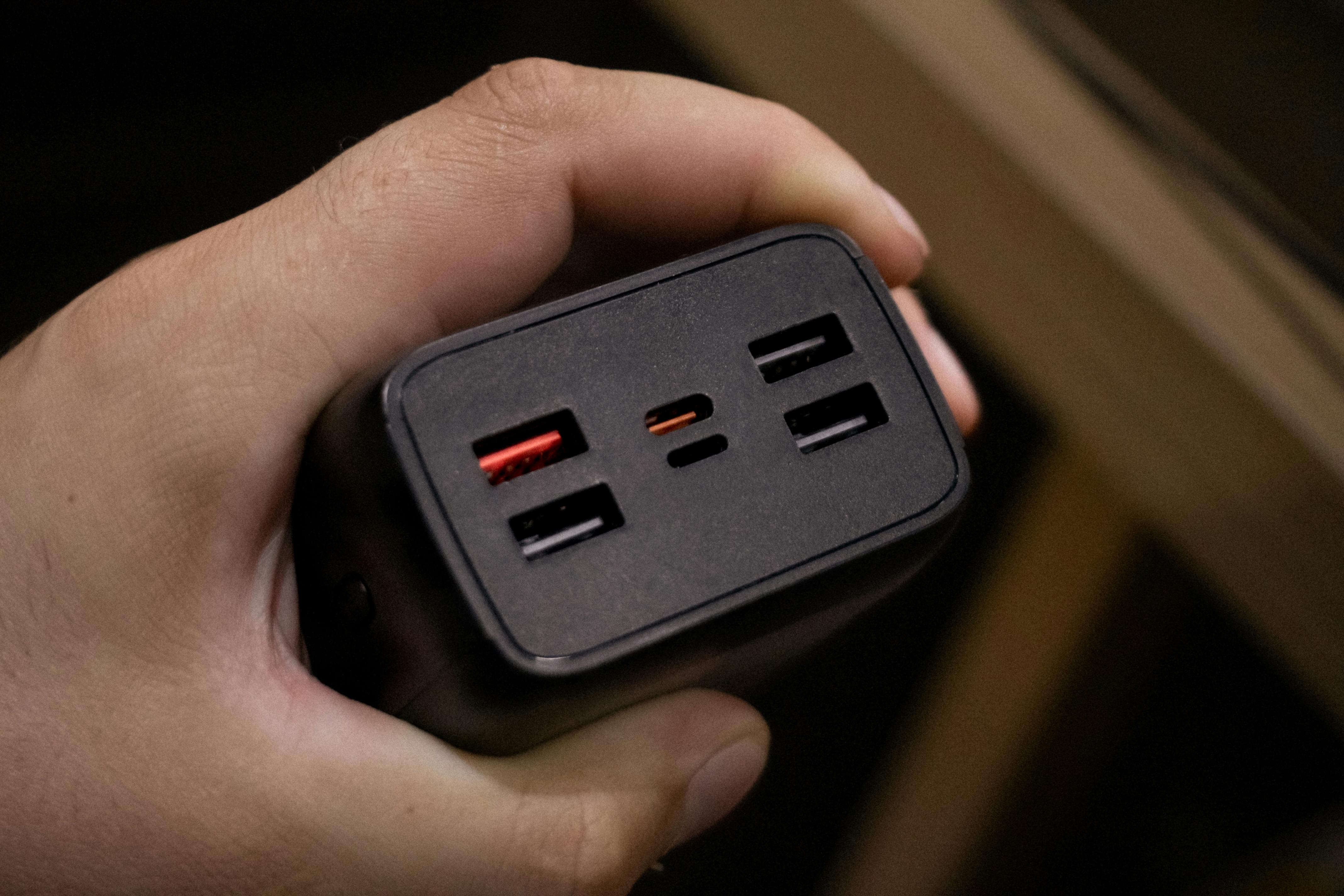
While capacity matters, charging speed is just as important—a 10,000mAh power bank with 18W PD can power up your phone quicker than a higher-capacity model with slower output.
Look for features like:
- PD (Power Delivery) for fast-charging phones and laptops
- Quick Charge (QC) 3.0/4.0
- USB-C output/input
- Multiple ports for simultaneous charging
So, How Much Do You Really Need?
Ask yourself:
- Do you carry one device or multiple?
- How often do you access a wall outlet?
- Do you value portability or full power?
If you just need a backup boost, go with 5,000–10,000mAh.
If you're always mobile, consider 15,000–20,000mAh.
For full workstations or long trips, go big with 25,000mAh+—just check airline limits (usually under 27,000mAh or 100Wh).
1. What size power bank is best for everyday use?
For most people, a 10,000mAh power bank is the best all-around choice. It offers enough capacity to recharge most smartphones one to two times while remaining compact and easy to carry for work, commuting, or daily travel.
2. How many times can a 20,000mAh power bank charge a phone?
A 20,000mAh power bank can typically charge most smartphones around 3 to 4 times, depending on the phone's battery size and charging efficiency. Actual results vary because some energy is lost during voltage conversion and heat generation.
3. Can a power bank charge a laptop?
Yes, but not every power bank can. To charge a laptop, choose a 20,000mAh or larger power bank that supports USB-C Power Delivery (PD) with sufficient wattage for your laptop's charging requirements.
4. Is a higher mAh power bank always better?
Not necessarily. While a higher mAh rating provides more charging capacity, it also makes the power bank larger and heavier. The best power bank is one that balances capacity, portability, fast charging features, and your daily charging needs.
The Bottom Line
A powerbank shouldn’t be overkill—or underpowered. Choosing the right mAh comes down to knowing your devices, your habits, and your lifestyle. With the right one in your bag, you’ll never worry about red battery bars again.
Did you enjoy reading this article?
Stay updated on our latest deals and promos by following our social media accounts.
Find this article helpful? Don't forget to click on the share buttons below.